/
CASE STUDIES
/
2026 - Present
/
BII
From vendor lock-in to a room-booking system built for the ecosystem

/
CLIENT
BII
Visit site
/
TIMELINE
2026 - Present
/
OVERVIEW
BioInnovation Institute had been using a third-party software tool for room booking for several years. It worked, but as the organization grew, the limitations became clear. Custom functionality couldn't be built. Workflows couldn't be adjusted. The tool dictated how BII operated, not the other way around.
When the question came up whether modern tooling and AI could make it feasible to build something tailored to their needs, the answer was yes, and the result went far beyond a simple booking replacement.
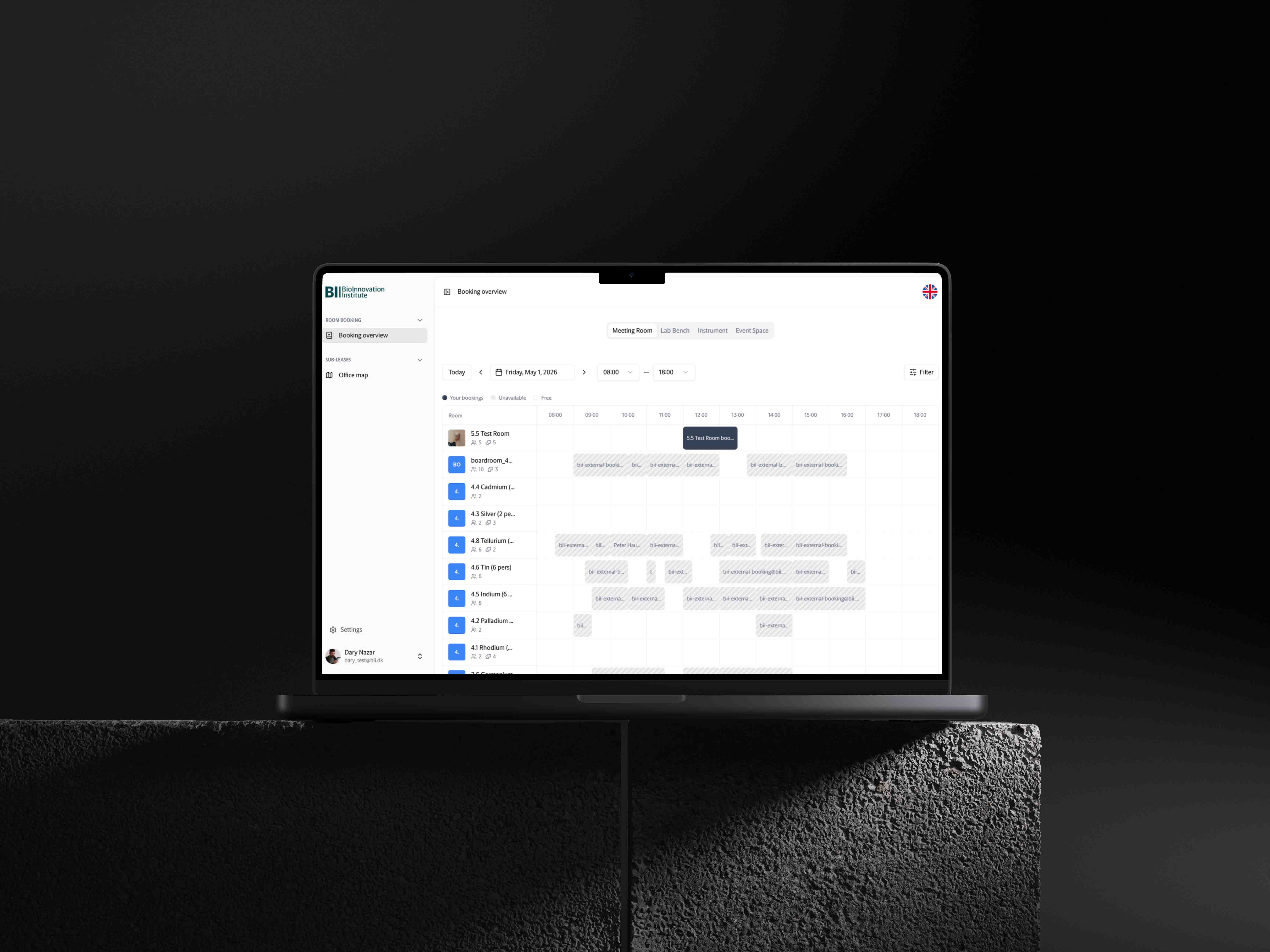
We built bii-room-booking as a standalone Composer and NPM package. This was a deliberate architectural decision. The BII ecosystem is large: there's BII Orbit (the community platform), a central facility app, and several internal tools. Previously, booking functionality lived in a separate app with its own login. Now, the package can be integrated into any project within the ecosystem without duplicating code or maintaining separate systems.
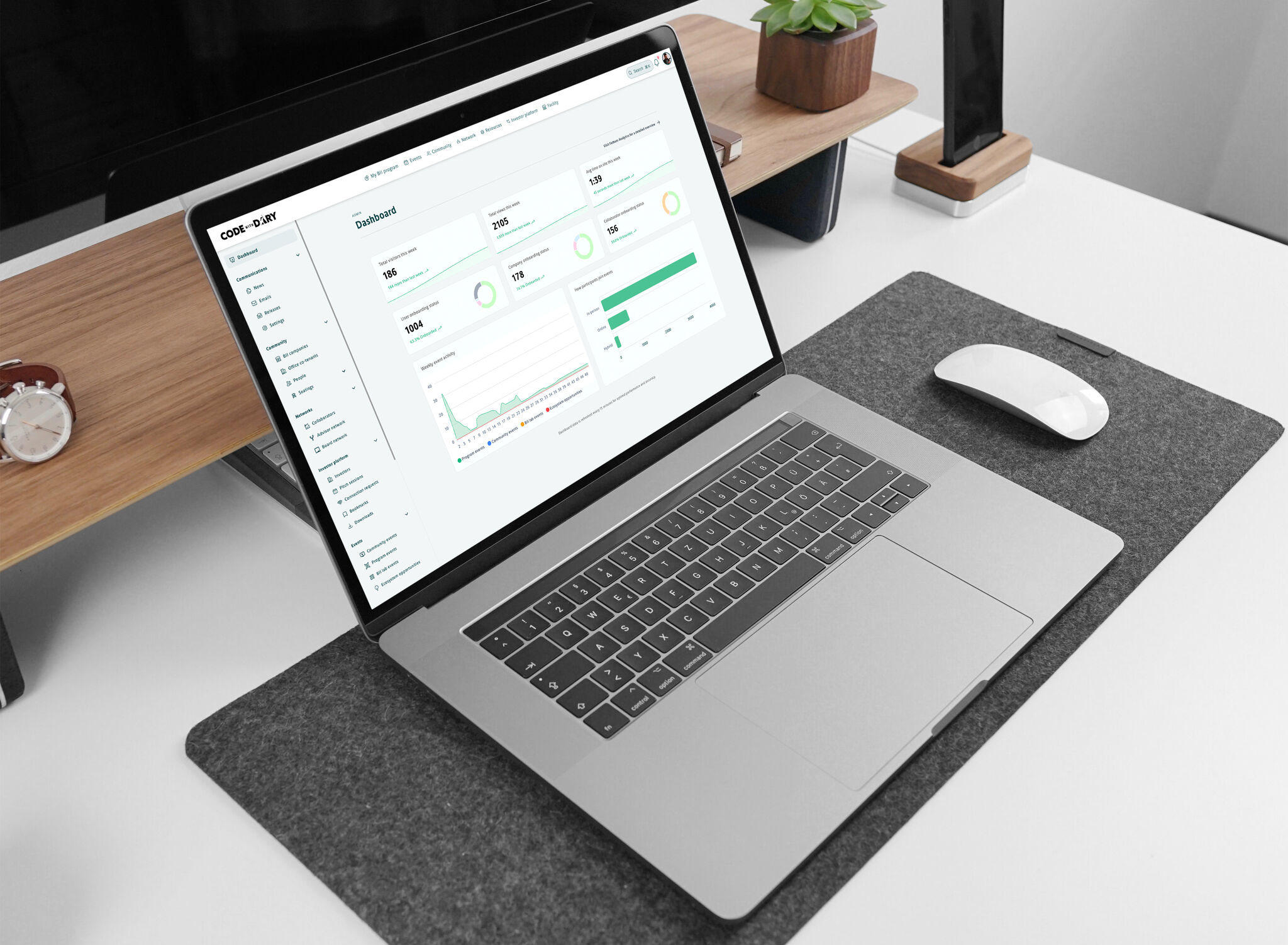
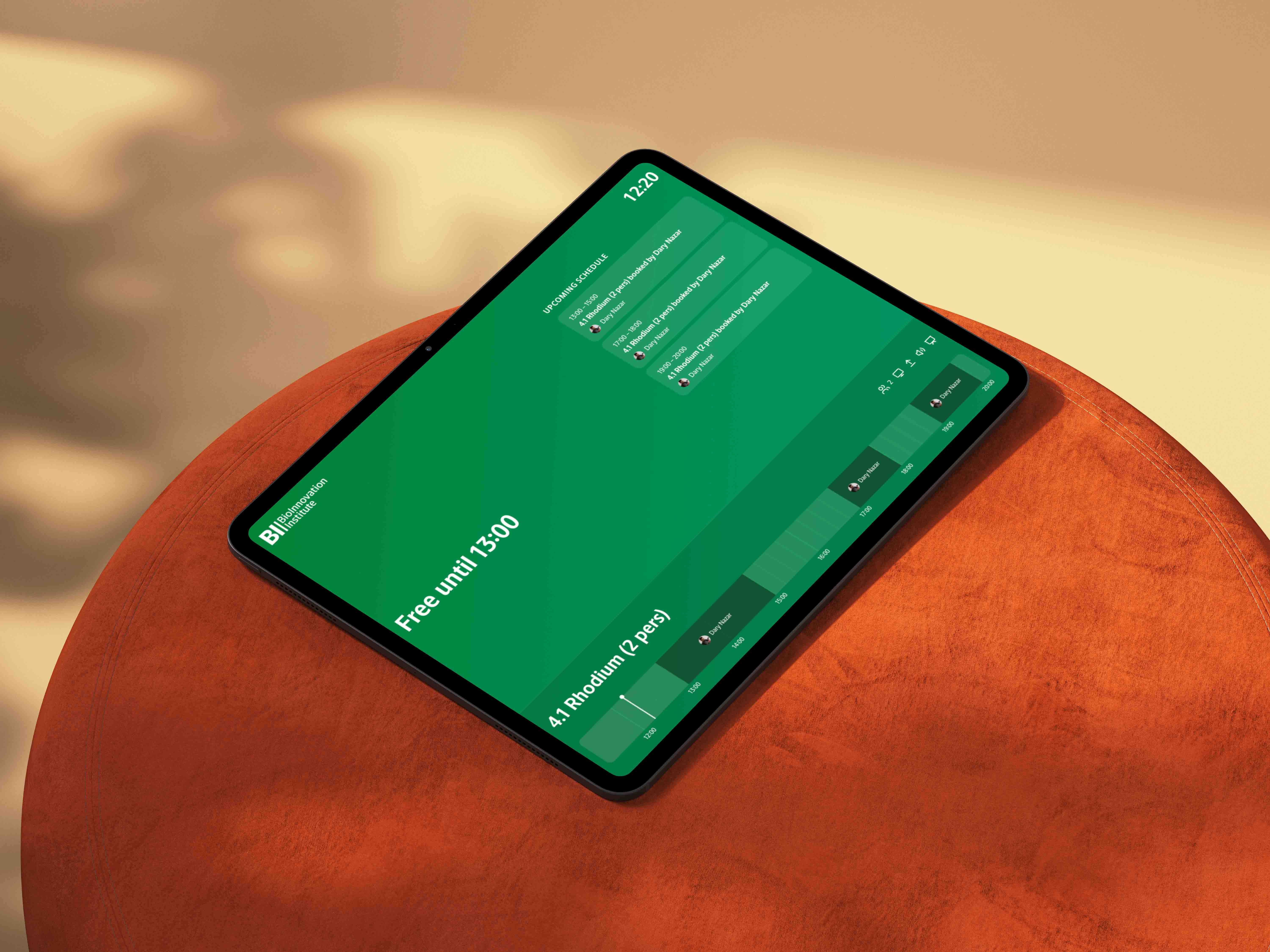
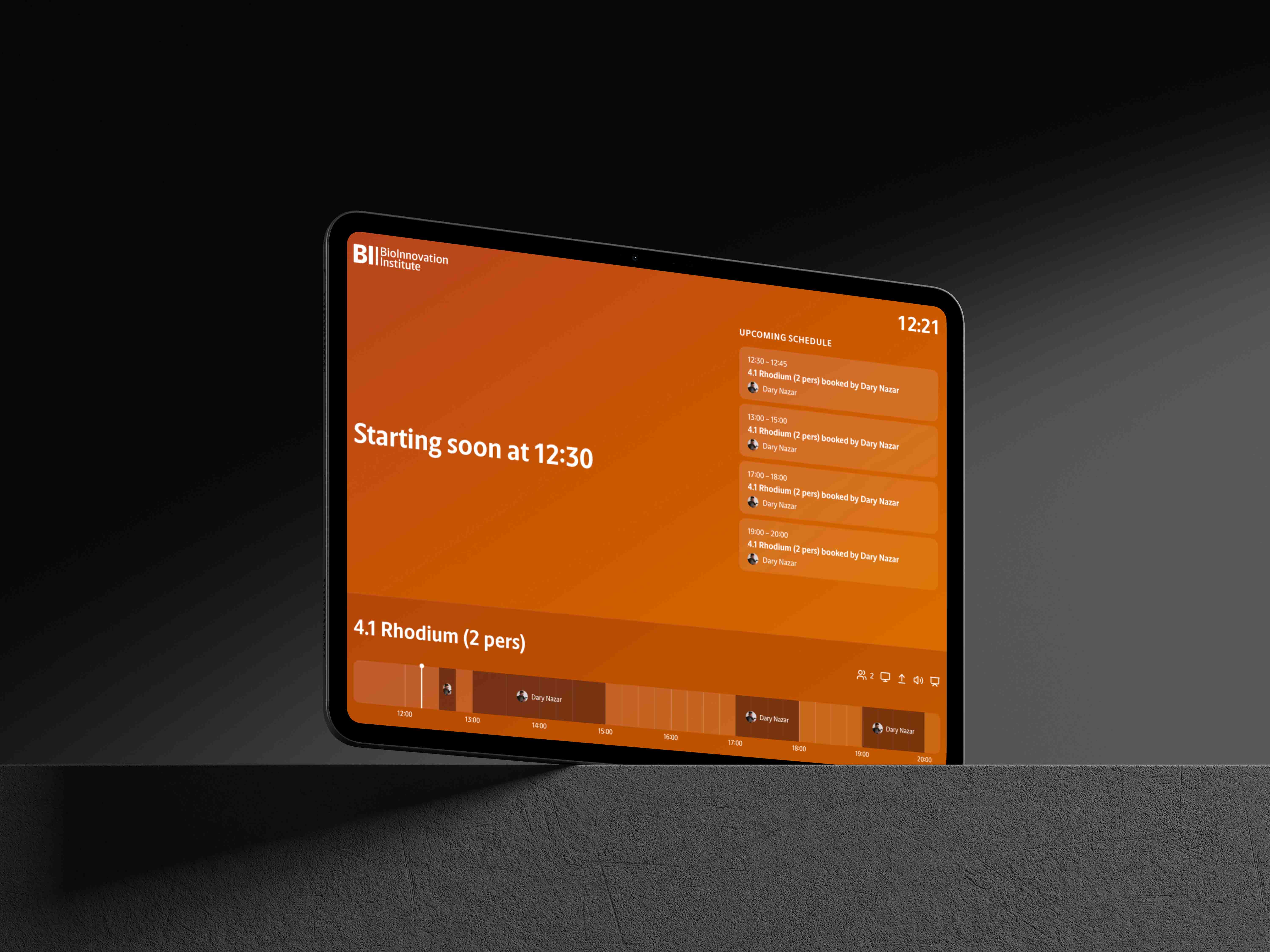
The central facility app serves as the primary interface, but the same booking engine powers room availability across BII Orbit and the physical meeting room tablets deployed throughout the building.
/
CHALLENGES
How do you replace a tool that an entire organization relies on daily, without disrupting
workflows, while making it flexible enough to serve multiple platforms across the ecosystem?
The existing third-party tool offered no customization, feature requests were either
rejected or required expensive vendor involvementRoom bookings lived in isolation, disconnected from the Microsoft ecosystem that every BII member uses daily
Multiple applications needed access to booking data, but each had its own authentication and infrastructure
Physical meeting room displays needed a reliable, always-on kiosk solution with real-time status updates
The transition had to be seamless, over 1,000 community members book rooms through Outlook without knowing what system handles it behind the scenes
How do you replace a booking tool that 100+ people use daily, connect it to Outlook, deploy it on tablets across the building, and make it reusable across an entire ecosystem of applications?
/
SOLUTIONS
We designed the system as a shared package that integrates into any Laravel application within the BII ecosystem, eliminating vendor lock-in and giving full control over every feature.
Reusable package architecture, bii-room-booking is a standalone Composer and NPM package, shared between BII Orbit, the facility app, and future projects. One codebase, deployed everywhere.
Two-way Microsoft Outlook sync, bookings made through Outlook are automatically synced into the platform via the Microsoft Graph API. Room availability is checked in real-time, and conflicts are prevented across both systems.
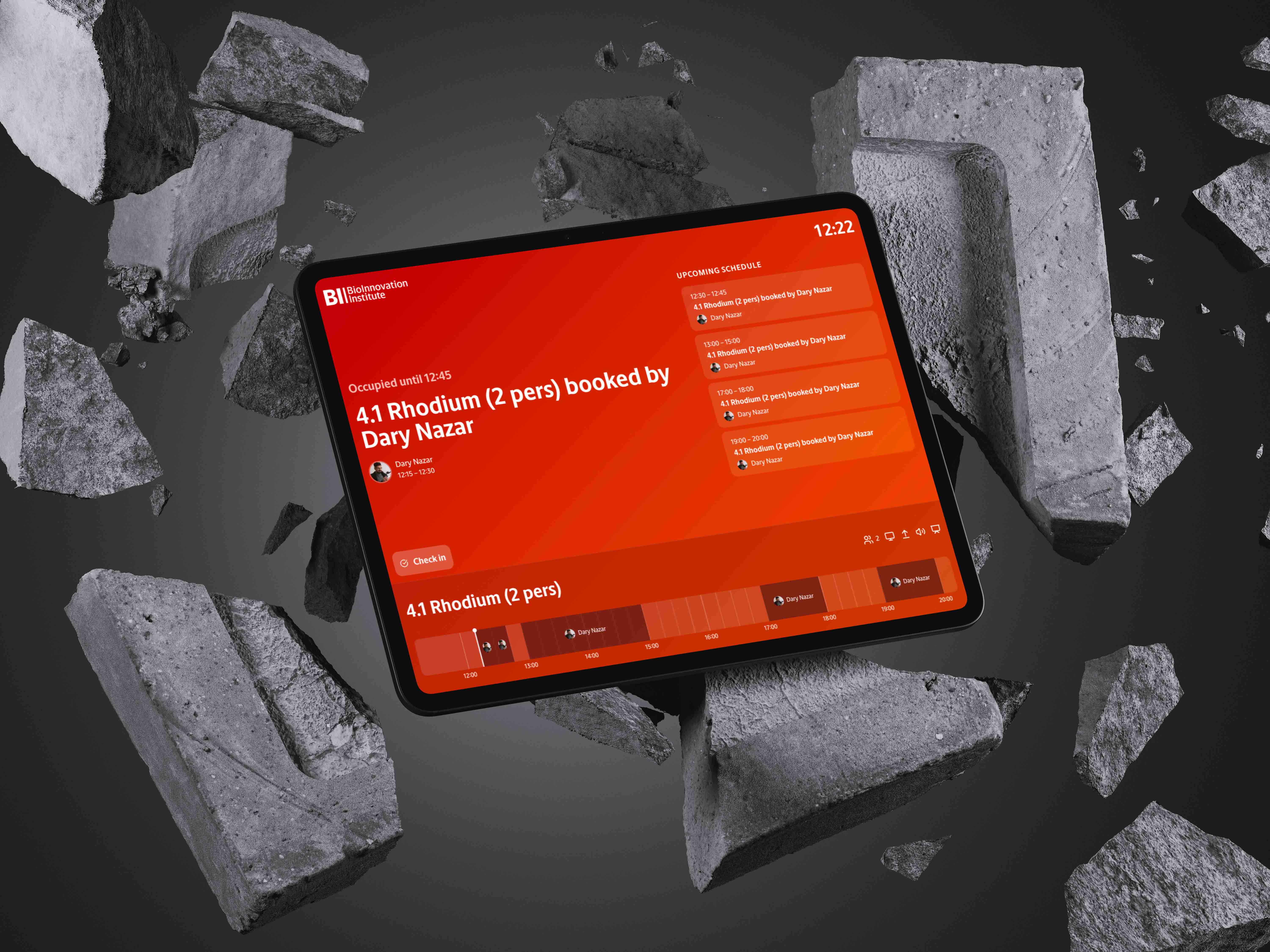
Real-time updates with Laravel Reverb, every booking, cancellation, and check-in is broadcast instantly via WebSockets. Whether you're on the web app or standing in front of a meeting room tablet, the status updates within seconds.
Meeting room kiosk displays, custom Android tablets running a purpose-built kiosk app, deployed outside every meeting room. Staff can see availability at a glance, book a room on the spot, or check in to their reservation. LED indicators on ProDVX tablets show room status: green for available, orange for almost occupied, red for occupied.
Remote tablet management with AirDroid, all meeting room tablets are managed remotely. App updates, screen configurations, and troubleshooting happen without physically visiting each device.
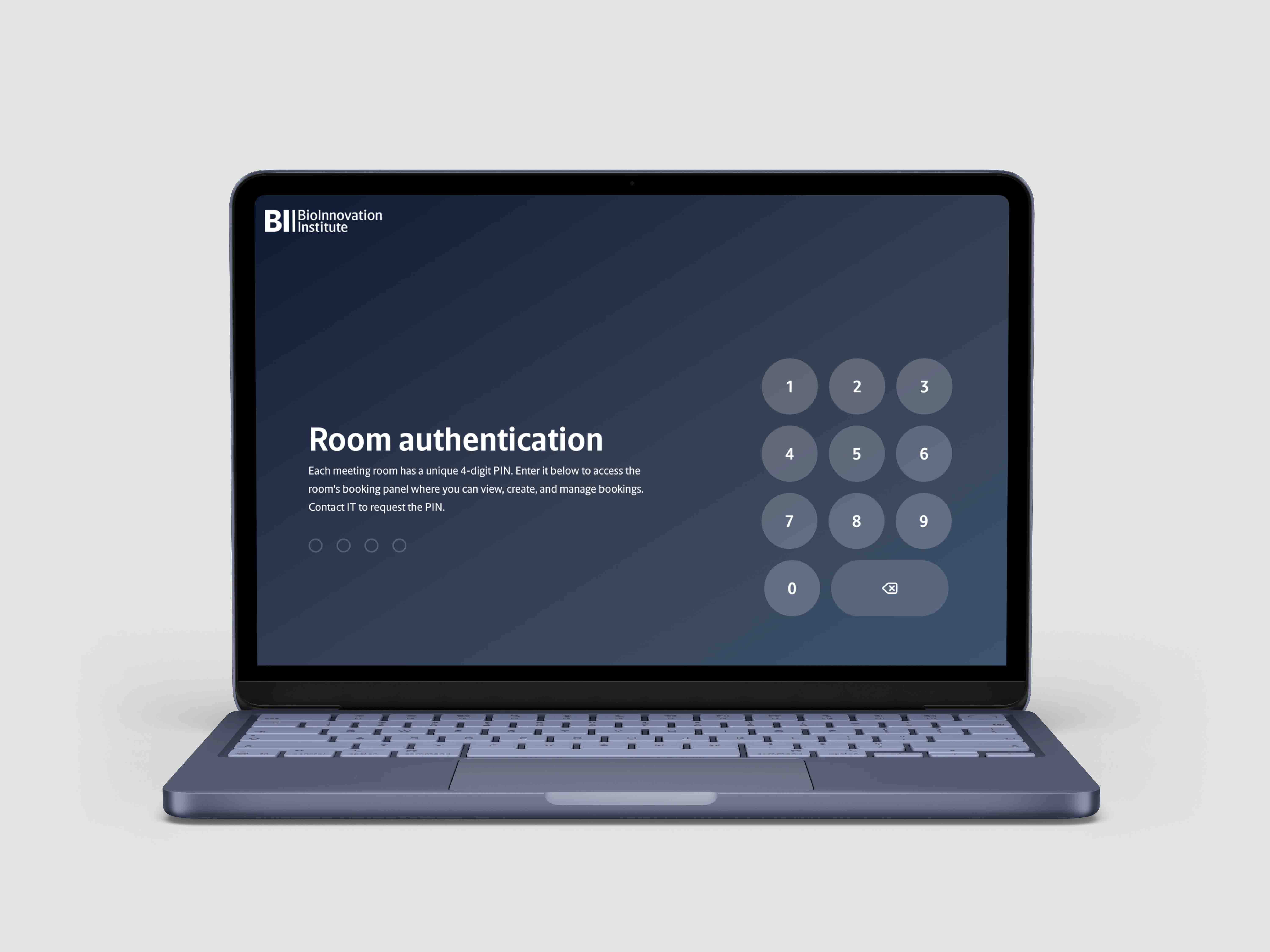
PIN-based kiosk authentication, each room has a unique 4-digit PIN. Walk up, enter the PIN, and the tablet shows that room's schedule. Token-based persistent links allow tablets to stay connected without re-authentication.
Centralized facility management, one app with one login replaces what used to be separate systems. Room booking, floor plans, and facility management live under a single authenticated interface.
Progressive Web App (PWA), the facility app is installable on any device, providing a native app experience without app store distribution.
/
RESULTS
The platform is live and actively used across the BII campus. New features are continuously developed as the organization's facility needs evolve.
45
meeting rooms synced
800+
bookings processed
1
shared package
/
CASE STUDIES